
August 28, 2026
Mortgage Rates in 2026: Separating the Signal From the Noise
If you’ve followed mortgage rates this year, there has been no shortage of reasons offered for why they’re moving.
Inflation reports, employment data, Federal Reserve meetings, geopolitical conflict, oil prices, and government borrowing have all influenced markets at different points in 2026—for better and for worse. We’ve seen periods of meaningful improvement as well as stretches of volatility, and on any given day, one of those stories can appear to be the story for mortgage rates.
But not every headline carries the same weight, and not every market reaction tells us much about where rates are headed longer term.
Mortgage rates reflect a combination of economic data, inflation expectations, and conditions in the broader bond market. Some events create short-term volatility. Others can meaningfully change the longer-term outlook. Understanding the difference—and what the bond market is actually paying attention to—is far more useful than trying to predict where rates will be next week or next year.
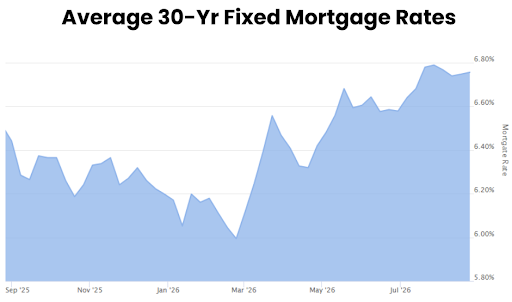
Source: Mortgage News Daily (MND) Rate Index. The index tracks average mortgage-rate movement using a consistent benchmark scenario and is intended to illustrate market trends. Actual rates vary based on borrower, property, loan and market characteristics. This information is not an offer or commitment to lend.
Start With Inflation and Employment
Two of the most important things to watch for the longer-term direction of mortgage rates are inflation and employment.
Inflation matters because mortgages are ultimately long-term debt investments. If investors expect inflation to remain elevated, they generally require higher yields to compensate for the declining purchasing power of the dollars they’ll be repaid in the future. Higher bond yields generally translate to higher mortgage rates.
Employment matters because it gives us a window into the strength of the broader economy. A very strong labor market can support wage growth and consumer spending, potentially keeping inflation elevated. A gradually cooling labor market can reduce some of that pressure and create a more favorable environment for bonds and mortgage rates.
We’ve seen examples of both recently. Softer employment data has periodically helped mortgage rates, while encouraging inflation reports have created their own periods of improvement.
But there is an important qualifier: all else equal.
And lately, all else has rarely been equal.
Sometimes the Biggest Story Isn’t an Economic Report
Recent geopolitical conflict in the Middle East is a good example of how quickly the market’s focus can shift away from the traditional economic calendar.
Geopolitical events can affect rates in multiple—and sometimes opposing—ways. Global uncertainty can increase demand for U.S. Treasury bonds as investors seek safety, potentially pushing yields lower. At the same time, conflict that threatens global energy supplies can send oil prices higher, increasing inflation concerns and pushing yields in the opposite direction.
We’ve seen both dynamics matter this year. At times, geopolitical uncertainty has helped bonds through a flight to safety. At others, concerns about oil and inflation have carried more weight.
That doesn’t make traditional inflation and employment reports any less important. It simply means markets are processing all of this information at once. A favorable inflation report doesn’t guarantee lower mortgage rates if another development is creating a larger concern for bond investors.
This is one reason short-term rate predictions are so difficult. The underlying economic trends matter, but markets don’t have the luxury of considering them in isolation.
The Fed Matters, But It Doesn’t Set Mortgage Rates
This is probably the biggest misconception worth clearing up.
The Federal Reserve controls a short-term policy rate. Mortgage rates are determined in the bond market and are much more closely connected to mortgage-backed securities and longer-term Treasury yields.
That doesn’t mean Fed policy is unimportant. But the bond market is forward-looking.
Investors are constantly trying to anticipate what the Fed will do next, and those expectations are often reflected in bond prices well before an actual Fed meeting. If economic data convinces investors that future Fed rate cuts have become more likely, bond yields—and potentially mortgage rates—can move lower before the Fed actually does anything.
The reverse is also true. If a Fed decision is widely expected, it may already be largely priced into the market by the time it’s announced. Mortgage rates can even move higher following a Fed rate cut if the Fed’s accompanying commentary or economic outlook causes investors to expect more inflation or fewer rate cuts in the future.
While mortgage rates don’t track the 10-year Treasury perfectly, the two tend to move in the same direction—making Treasury yields a much better window into mortgage-rate movement than the Fed’s short-term policy rate.
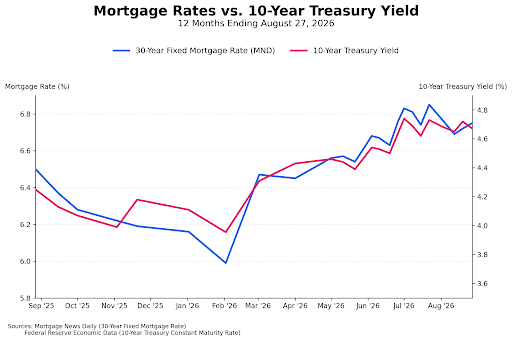
The takeaway isn’t that the Fed doesn’t matter. It’s that the market is usually trying to stay one step ahead of it.
There Are Longer-Term Forces at Work
Another factor receiving more attention is the sheer amount of new debt coming to the bond market.
Persistent federal budget deficits require the U.S. Treasury to issue debt to finance government operations. When the supply of Treasury securities increases, that debt still needs buyers. All else equal, greater supply can require higher yields to attract enough demand.
We’re seeing a similar supply dynamic in the corporate bond market. Major technology companies are borrowing heavily to fund the infrastructure investment required for AI, with Amazon and Alphabet among the notable recent issuers. Corporate bonds don’t directly determine mortgage rates, but they’re competing for many of the same investor dollars. When a large amount of new debt hits the market at once, investors have more choices about where to put their money, which can contribute to upward pressure on yields across the broader bond market.
It’s another reminder that inflation reports and Fed policy aren’t the only things that matter to longer-term rates.
So, Are Mortgage Rates Going Down?
There are good reasons to believe the environment could become more favorable for mortgage rates if some of the recent economic trends continue.
Continued progress on inflation and a gradually cooling labor market are two of the ingredients we’d typically want to see for lower rates. If those trends continue, and pressure from energy prices and geopolitical risks eases, the backdrop for mortgage rates could improve further.
There are also reasons to remain measured. Inflation can reaccelerate. Employment data can surprise. Geopolitical events can change quickly, and the amount of government and corporate borrowing can continue to influence longer-term yields.
That’s why I view the outlook as encouraging, but conditional. The ingredients for improvement are there, but markets are constantly adjusting prices based not only on what happened today, but what investors believe is likely to happen tomorrow.
Rate forecasts—even well-informed ones—are best viewed as possible scenarios rather than promises.
What Does This Mean for Buyers and Sellers?
For buyers, mortgage rates obviously matter. They affect monthly payments, purchasing power and the overall economics of a home purchase.
But “waiting for rates to come down” isn’t really a financial plan unless we know when rates will fall, how far they’ll fall and what everything else will look like when they do.
We don’t.
A better approach is to understand what works today. Buyers can work with their mortgage advisor, financial advisor and real estate professional to evaluate a payment and purchase strategy they’re comfortable with based on current information. If the financing doesn’t make sense today, waiting may absolutely be the right decision. But that decision should be based on personal finances and goals—not a rate forecast that may or may not come true.
For sellers, rates are worth understanding because they affect the buyers on the other side of the transaction. Financing costs influence purchasing power and qualification, making the mortgage environment an important piece of context even if you’re not personally obtaining a loan.
That understanding can also become a useful negotiating tool. In the right situation, sellers can work with their real estate professional to evaluate strategies such as seller credits or interest-rate buydowns that may help address a buyer’s financing concerns and bring the two sides together. The details—and the value of those strategies—vary from one transaction to the next, which is why leaning on the real estate and lending professionals involved is so important.
Focus on the Signal
There will always be another inflation report, Fed meeting or headline capable of moving markets.
The goal isn’t to predict every move. It’s to understand the bigger picture well enough to make informed decisions despite the noise.
About Generations Home Loans
Generations Home Loans‘ vision is to be a driving force in transforming lives through homeownership, shaping a future where every client achieves lasting financial security and generational wealth. We aim to set the standard for integrity, expertise, and meaningful community impact, building a legacy of successful clients and thriving partnerships for generations.
Generations Home Loans is a trusted mortgage provider dedicated to helping families achieve their dreams of homeownership. With a history of excellence and innovation, the organization offers tailored lending solutions to meet each client’s unique needs. Its experienced team of professionals provides personalized guidance and expert advice, empowering borrowers to build wealth and long-term stability through owning a home.
To find out more about home loan options or get pre-approved, please visit
www.generationshomeloans.com
Generations Home Loans is an Equal Housing Opportunity Lender (Company NMLS #252939). Generations Home Loans has a business relationship with Windermere Real Estate.
About the Author
David Massey is an Area Manager and Mortgage Advisor with Generations Home Loans and has worked in mortgage lending since 2012. Based in Davis and serving the greater Sacramento region, David works with homebuyers, homeowners and real estate professionals across a wide range of financing scenarios. His approach focuses on making complex mortgage and financial-market information understandable so clients can make informed, comfortable decisions.
Category In The News, Real Estate

Windermere Signature Properties
With the California Local blog, Windermere Signature Properties strives to deliver the most valuable information to both home buyers and sellers while highlighting our favorite local gems that make Sacramento the best place to live in California. DRE# 00182401
Never Miss a Post!
Subscribe by Email